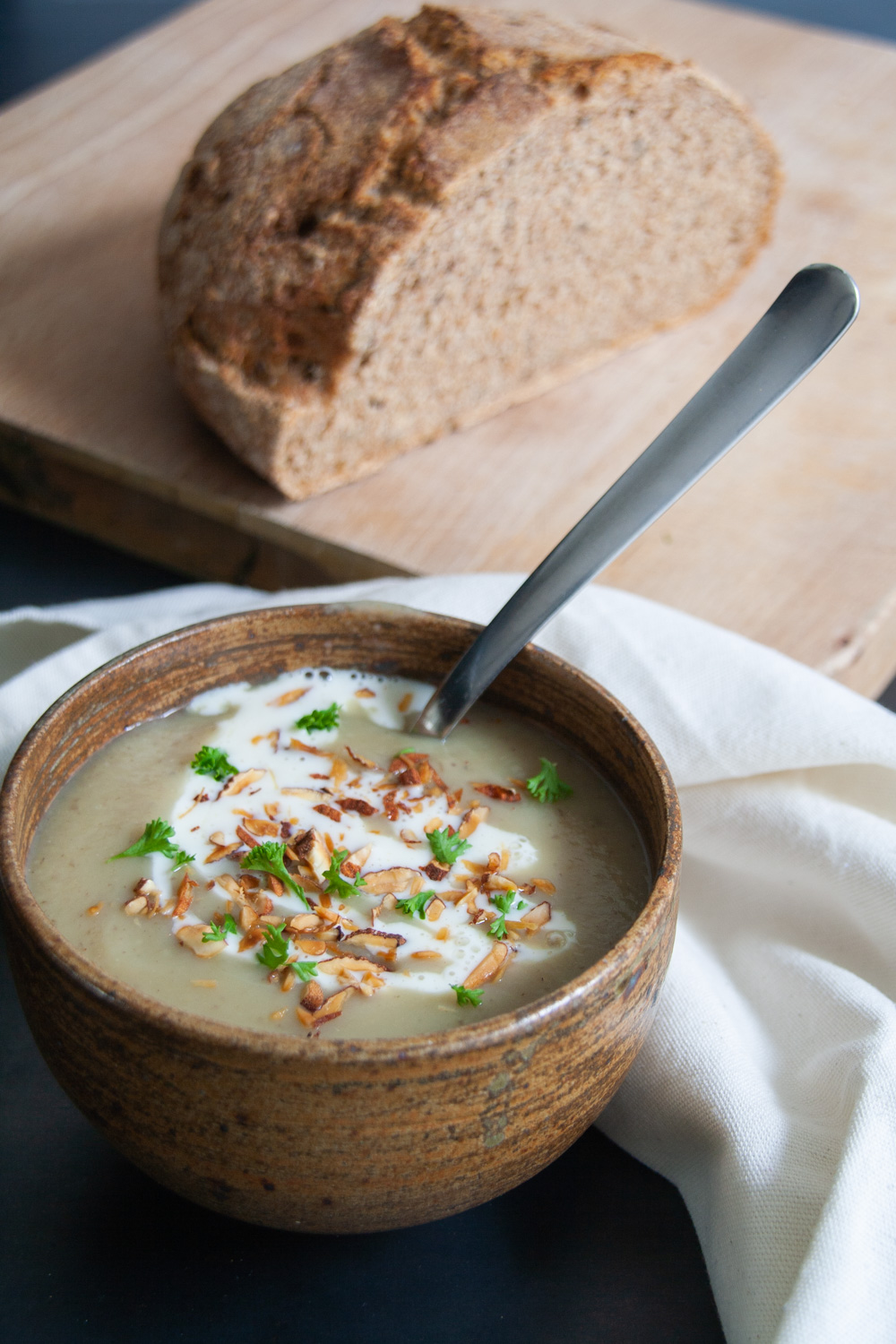
This might actually be my favourite soup: deliciously creamy, packed with flavour and yet so easy to make. For an extra festive version: toasted sliced almonds bring in an extra flavour dimension that pairs really well with the slightly sweet and nutty taste of Jerusalem artichoke.
Roughly chop the onion and sauté it with a little oil in a large pot until translucent.
Meanwhile, scrub the Jerusalem artichoke clean and cut into chunks. You don't have to peel them: the peel is perfectly edible.
When the onion is translucent, add the pressed garlic cloves and the Jerusalem artichoke chunks. Sautée a few more minutes while stirring well.
Then add the vegetable broth and let simmer for 10 to 15 minutes.
When the Jerusalem artichoke is well cooked, you can blend the soup and season with black pepper and salt.
To make it extra festive, you can serve this soup with a dash of soy cream, toasted sliced almonds and fresh garden herbs to add some colour.
It's best to toast the almonds in a dry pan over medium heat. Spread the sliced almonds evenly over the pan and stir regularly. From the moment that they start to turn brown it can go very quickly. So keep a good eye on them to prevent them from turning black. Also pay attention, because the almonds get extremely hot due to the high natural oil content. In return you will be rewarded with a wonderful aroma. Enjoy it!
5 servings
1 bowl (basic recipe without toppings)
* The % Daily Value (DV) tells you how much a nutrient in a serving of food contributes to a daily diet. 2,000 calories a day is used for general nutrition advice.